Showing posts with label exhibitions. Show all posts

Wednesday, 27 April 2011

Kemistry Gallery: Roger That!

While in London, I also nipped across to Shoreditch to Kemistry Gallery. I'd heard about a typographic exhibition that was being held there, titled "Roger That!", based upon the phonetic spelling alphabet, developed by The International Civil Aviation Organisation (ICAO). The work had been created by EatSleepWork/Play, Inventory Studio and Julia. It seemed such an intriguing concept to me; I am very much interested in experimental and exploratory typography, so I was really looking forward to it. 


After getting lost for a while I discovered the gallery, which was a tiny unit down a lovely little cobbled street. I was a little disappointed that it was so small, but the exhibition itself was so charming that I soon overcame my disappointment. Spread across 3 of the walls was a narrative, broken up by the letters of the alphabet, printed on A3 sheets in 2 colours only. Each of the posters portrayed the phonetic spelling of each letter, some in an obvious way, some in more abstract ways. It was a really lovely representation, and certainly brought a smile to my face. It was a great approach to marry a narrative with the phonetic spellings, as it made the experience more interesting and I loved the witty and imaginative tone to their work. It has definitely given me the desire to create work that has more character and fun to it. Here are a coupleof my favourite letters:


C - Charlie > Charlie Chaplin. 


E - Echo > The story of Echo the Greek nymph

Sunday, 24 April 2011

Wim Crouwel: 'A Graphic Odyssey' at London's Design Museum

I'd been hearing about this exhibition for a while on Twitter and via various blogs, so I knew I had to take a trip down to London this Easter so to not miss out.

As I walked across Tower Bridge (which is a breath-taking experience in itself), I could see the Design Museum, with Wim Crouwel's recognisable identity design emblazoned across the exterior walls in the distance, and my excitement grew rapidly.  I've sadly not yet been able to visit the Design Museum, despite it showcasing many amazing design exhibitions in the past, so I was really looking forward to my visit.


The Dutch designer has had a prolific career, and this is evident as soon as you stepped into the exhibition space. I was totally overwhelmed with the size of the display, and the amount of work that was being showcased. Crouwel is regarded as one of the 20th century's leading designers, and you can see why when viewing his work. I was really taken aback with how much he had produced; from posters to brochures, and typefaces to calendars, it really was an inspiring collection of formats and designs. I was particularly drawn to the far wall, which showcased some of the identity designs he had produced, as they were all such simple - yet impressively clever - pieces of design. It surprised me that I was drawn to this particular area of his work, as I really struggle when trying to create identity designs. For some reason, it isn't my strong point, but definitely something I want to push myself into doing more often.

Another area of work that I was really excited by was the work he produced for Stedelijk museum, Amsterdam (with Total Design). He helped create a series of really beautiful posters and brochures, which blew me away. Their bold use of colour and type was expertly considered, helping to produce some incredibly striking pieces of design.


I felt completely in my element while at the exhibition, I probably spent over an hour studying his work and making notes and sketches. I even felt inspired to start generating ideas for one of my projects. It was a really great experience, and has made me want to try and see more exhibitions when I have the chance.


Wednesday, 30 March 2011

osa/ MERZEN/

Recently around Manchester, there has been a festival showcasing exhibitions and happenings the have been inspired by Kurt Schwitters. Titled MERZMAN, the festival explores the artist's legacy in modern architecture and contemporary art practice. A month or so ago, I went to view Ingo Gerken's exhibition at Castlefield Gallery as part of the festival, which if I am honest I was completely disappointed by. With this in mind I really wasn't sure what to expect but wanted to experience Cube's event with an open mind.

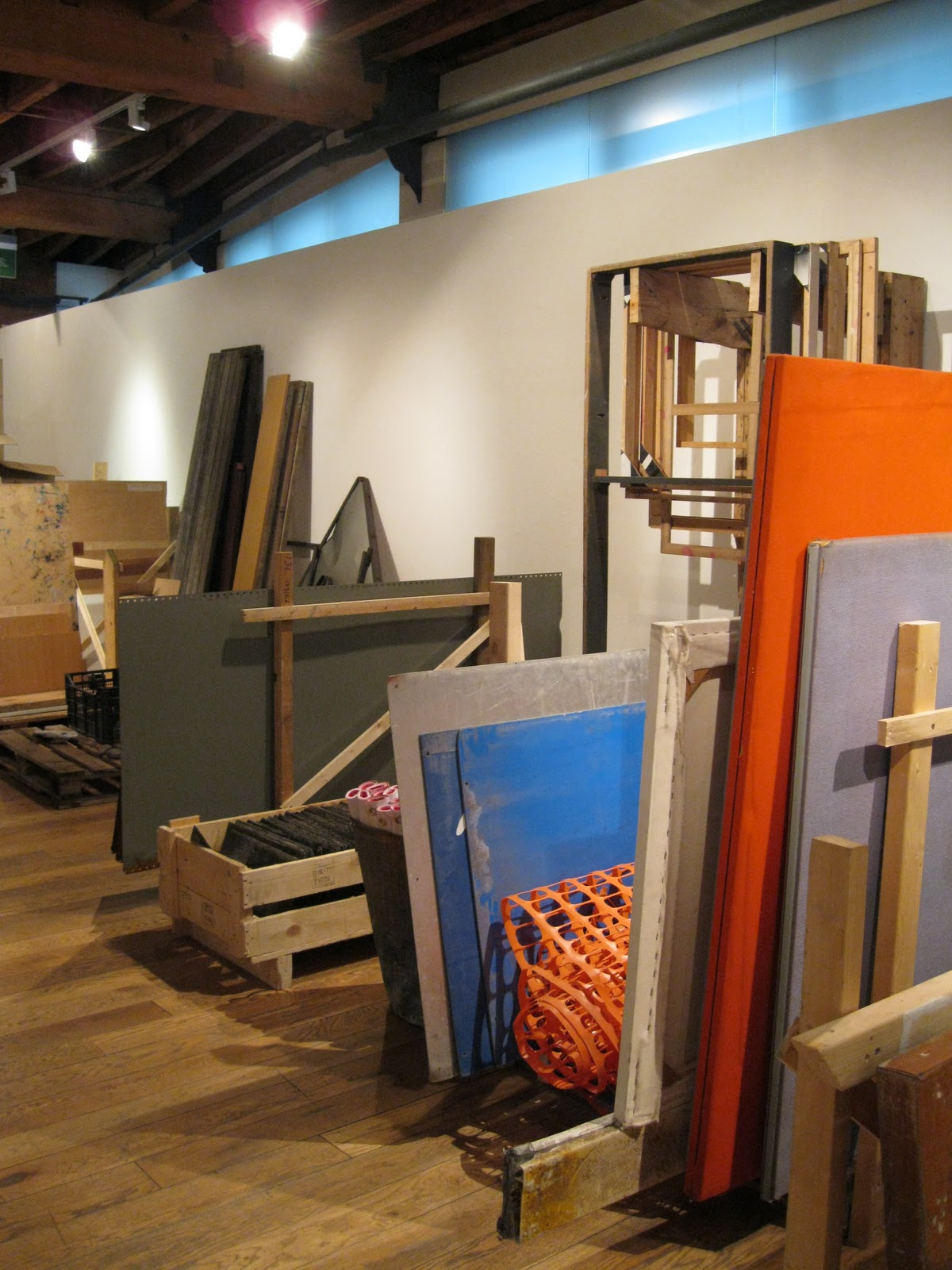
It was an odd set up - at first I wasn't sure whether I had entered the correct room, as it was filled with planks of wood, old doors, scraps of building materials - and even a broken litter bin - which was curious to see in a gallery space to say the least. It looked like a junk site, however we were soon given a run-down of what the show was about, and there was a lot more material to read which helped explain the idea behind the show. This was already an improvement on the previous Castlefield exhibition, as previously we hadn't been given any explanation of what we were supposed to be viewing. 


osa's installation was a representation of Schwitters' well-known collage technique, which he called Merz. The artist invited the public of Manchester to bring along any found or unwanted items that could be contributed to the installation (hence the "junk" we discovered on entering the building). The idea was to transform the gallery in order to blur the border between existing space and installation, or frame and content. This is exactly what Schwitters' was exploring in his collages - one of which was featured as part of the exhibition. His work has been really highly regarded by me for a very long time and it was amazing to see it on display as I have yet been able to do so. His collages are so intricate and visually stimulating. I loved the fragments of old type and stamps the most.


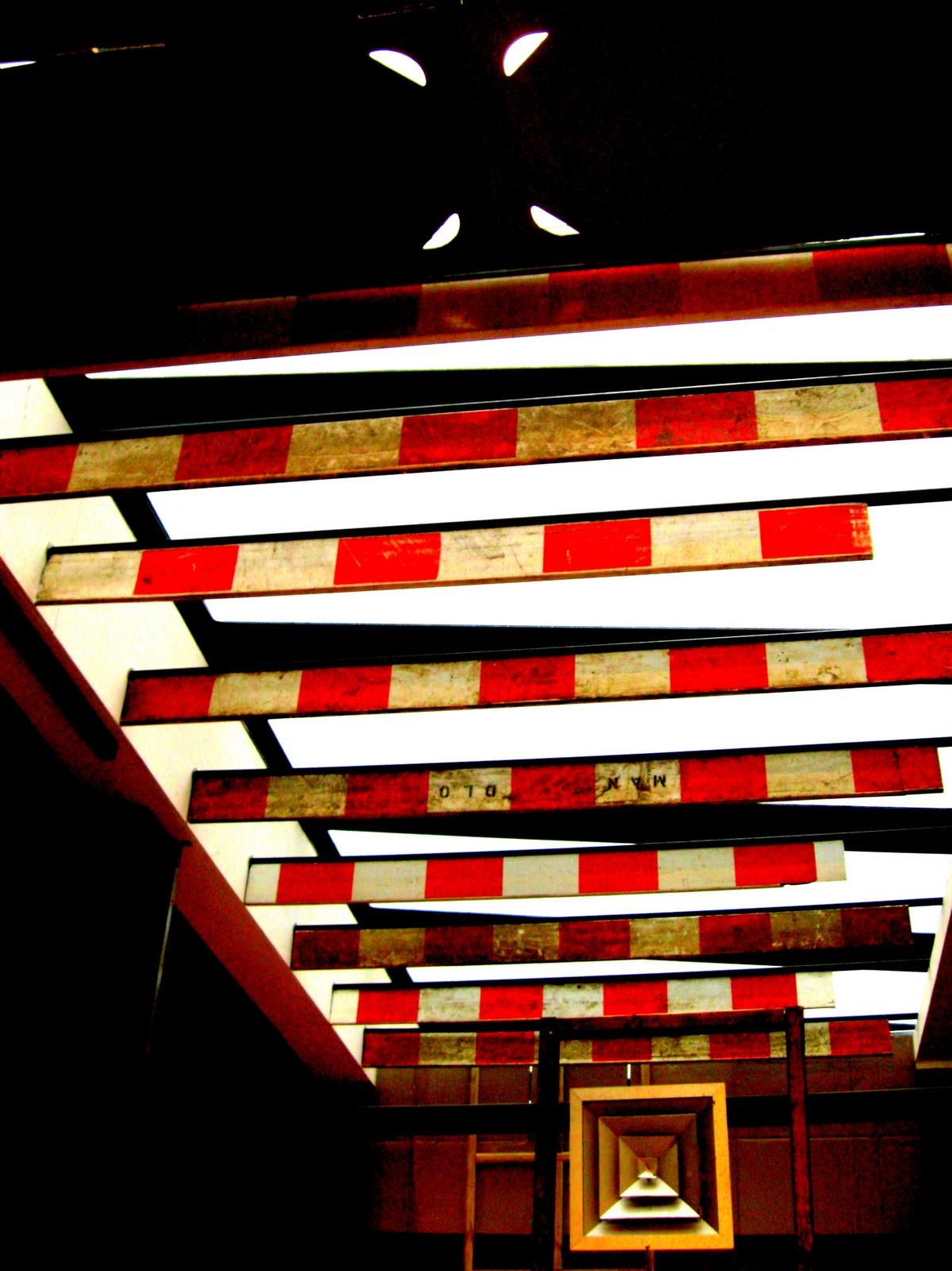
The exhibition set up, allowed me to view these random fragments of Manchester in a different light; plastic construction fencing cast vivid shadows on the wall and the orange colour contrasted beautifully to some planks of wood that had been hung next to it. Roadwork barriers held from the ceiling formed layers against the gallery's fan. I began taking photographs of what I saw, which themselves became installation collages. Here are some of my favourite snapshots:


I thought this was a much better representation of the Schwitters legacy. It was interactive, dynamic and really made you view the somewhat mundane elements in a different way; a sort of beautiful context displacement.

Flashback: Anish Kapoor

Once again I have slipped behind on writing my blog up, so not only does Flashback signify the name of this exhibition, but it also refers to the fact that I visited it nearly 3 weeks ago now, oops.

I've been aware of Anish Kapoor for a long time now, in fact I'm pretty certain I first discovered what he was about back during my AS Level Art studies, but this was the first time I was to witness his work in person. If I am completely honest, I wasn't sure what to expect. This was probably due to my rather limited knowledge of what he does, but on entering the exhibition I was very pleasantly surprised.

Kapoor's 'Flashback' exhibition is currently being held at Manchester Art Gallery by the Arts Council Collection, and comprised of sculptures from different stages of his career. The pieces ranged from early sculptures made using pigment, to later works employing stone and mirrored surfaces, to works that engage directly with the surrounding architecture. It was this last element that I think impressed me most, particularly his piece "When I am Pregnant" (1992). From afar, it seemed as though the wall at the far end of the gallery space had some sort of eerie shadowy shape projected onto it, but as you came closer you realised that it in fact formed a rather large and protrusive bump extending from the wall's surface. It was very surreal but fascinating, and really played tricks on your perceptions of the room and its dimensions.


The whole space had a strange sense of calm, I found myself staring into the works and becoming almost lost in what I was viewing. I was also really taken in by another of his works, titled "Her Blood" (1998). These 3 curved mirrored plates distorted the reflected images that varied depending on how close you stood to them, rather like a more beautiful and dynamic hall of mirrors. I spent a lot of time trying to discover the surface of the plates; one of them was stained red, but it was really difficult to see how they had been created. I liked this fact though, it all added to the mystery of the experience.


I left the gallery feeling quite overwhelmed - in a good way. It was a really beautiful collection of work, and a very relaxing experience.

Thursday, 3 March 2011

Prints and Portfolios

I visited the Henry Moore: Prints and Portfolios exhibition at the Henry Moore Institution in Leeds this month. I've long appreciated the work of Henry Moore; however I have to admit I was unaware of the extent of his portfolio. Moore is most acclaimed for his sculptures and his paintings of the London Underground during the blitz, which are recognisable from their fluid and undulating forms. I was really surprised on entering the exhibition, as I did not know that he had also created numerous print and graphic works.

Reclining Figure, 1967

Moore worked mainly with etchings and lithograph printing, which he developed an interest in after the First World War and continued until the end of his life in 1986. What I really enjoyed viewing was the publications that he and various writers, artists and poets - including W H Auden, Hans Arp, Picasso, Max Ernst, Joan MirĂ³ and Mark Rothko - had collaborated on.  These are all people that I have been inspired by in the past, so it was really interesting to know that Moore was influenced by them also. In some cases, the books were dedicated to exploring subjects that had preoccupied the artist as a special interest, such as Elephant Skull, Stonehenge, The Artist's Hand, Mother and Child, and Trees.

Red and Blue Standing Figures, 1951

I was really taken back by Moore's choice of colours in his prints. From a graphic design perspective, the colour palettes complimented each other brilliantly and really added personality and depth to his work. The range of pieces and methods of mark-marking was also really impressive. Moore used lots of different techniques on top of his sketches to add texture and detail, as well as layering different sections on top of each other on translucent paper to form images. I liked this approach, it seemed to add another dimension to his work and created a soft aesthetic.

White Forms, 1966 

After the exhibition, I also visited Leeds art gallery, which is connected to the Henry Moore Institute. It was a really good experience, there were a lot of pieces that I recognised, for example the work of Francis Bacon. I find galleries a really relaxing place to be, and I love just taking in all of the sights so it was a really good experience for me.

Friday, 25 February 2011

Liverpool Biennial 2010


This is becoming a little ridiculous now, I am all over the place with my posts! Back in October (!) we took a trip across to Liverpool, to see their annual Biennial - one of the largest contemporary art events in the UK. "The sixth edition of Liverpool Biennial’s International Exhibition was Touched - Consisting of around 40 new projects by leading and emerging international artists. Principally new commissions as well as several key works previously unseen in the UK, Touched was presented across multiple venues: Tate Liverpool, the Bluecoat, FACT (Foundation for Art & Creative Technology), A Foundation and Open Eye Gallery, with half the exhibition sited in public spaces across the city."

Although there were numerous events and varying locations across the city, I unfortunately was only able to see the exhibition "The Cooperative" at the Old Paint Shop. I really didn't know what to expect when walking up to the exhibition space, but when I was confronted with a woman sat in one of the windows in nothing but her underwear and with the slogan "Make Belive" painted across her stomach (I am not entirely sure whether this was a deliberate spelling mistake or not) it was clear this wasn't going to be your run-of-the-mill art exhibitions.


The event has been promoted as one of the most exciting exhbitions in the UK, yet I really didn't feel that it was as good as it was being promoted to be. The work on display was supposed to "touch" you; in various different ways. However, a lot of it was extremely distasteful and definitely not for young eyes. I agree that it affected us as viewers by shocking and making us feel uncomfortable, but I struggled to define whether this was successful in a good way or not. It didn't leave me feeling very inspired and I feel this may be the reason it has taken me so long to write this visit up.

Some of the pieces were quite interactive - which did add to the experience - albeit not greatly. For instance I enjoyed the Rosa Barba display, titled Free Post Mersey Tunnels because as you walked through it sounds of the Liverpool underground were heard through a labyrinth of intricate pipes, giving a really atmospheric effect. It was quite visually beautiful too; stark and industrial but very intriguing. I also quite liked NS Harsha's installation; a room with a mirrored ceiling that reflected a sea of faces staring back at you from the floor - which created a very strange sensation of being watched.


Though it may be missing the point of the visit slightly, I was far more taken in by the old signage that was still existing in and around the building that hosted the works. They gave glimpses of what the location used to be, I am really sad I only got one photo. It doesn't show the extent of some of the lovely old typography that was printed on walls and signs. There was also some beautiful wallpaper remnants that had been left on odd walls here and there. It was a really lovely location, it is such a shame that this was all I could really comment positively on!


Wednesday, 17 November 2010

Recorders.

Rafael Lozano-Hemmer creates artworks that depend on your participation to exist. This exhibition records your pulse, fingerprints, voice and image, and these recordings form the actual content of the works. The content is entirely "crowdsourced", to use internet terminology. In this sense the works are playful, open and inclusive.

However, there is also a more ominous or predatory nature at play. The works use biometric and surveillance technology employed by governments and corporations to profile, control and predict our behaviours in the name of efficiency or safety. These tools have built-in prejudices, as when they are used for ethnic profiling.

In an age of reality TV, mobile computing, virtual economies, Google street view and credit databases, Lozano-Hemmer sees technology as an inevitable part of our culture. His approach is to "misuse" the technology to create experiences of connection and complicity by using ambiguity, irony, repetition, performance and self-representation.

I really enjoyed this exhibition. The idea that I was helping to contribute to the work that was on display was an interesting one. For me, tactile and interactive design is really important, and a quality that I want to incorporate into my own work more. 


Printed and Published

The Special Collections area at Sir Kenneth Green Library hosted an exhibition of book design and letterpress printing from Bracketpress (2005-10). The collection comprised of printed books, pamphlets, commercial designs and printed matter, all of which had been produced using traditional printing methods. The pieces were beautiful; I am a big fan of this style of work, as type and image seems a lot more considered and well-presented when it is printed using traditional letterpress techniques rather than digital methods. They seem far more special and precious. Here are some of my favourite pieces:


No. 26: Love Bold and in CAPS [of course], letterpressed postcard:


Nobody's Child Penny Rimbaud, pamphlet:


This Crippled Flesh by Penny Rimbaud, book:


Monday, 15 November 2010

Cabinets, envelopes, boxes and tins.

Today I visited the Herbarium at Manchester Museum, in order to gain a wider insight into the world of plant matter while working on my most recent project "Not Just Fleurons". The work in the Herbarium is based upon the extensive research and reference collections of preserved plants. There are about one million specimens, from all across the world; and some of which are the first ever specimens to have been recorded from that particular species.

I was in awe at just how much there was to look at; it was all fairly overwhelming and I really wasn't sure where to begin. I was also quite aware that the majority of the specimens were extremely fragile, often only one-of-a-kind and much of them up to 200 years old, so handling them was quite a daunting experience. 

Although the plants were fascinating in themselves, I was more intrigued by the way in which they had been collected and stored. There were hundreds upon hundreds of carefully filed boxes and cabinets - some of which featuring some really beautiful old stamps and type. There were also boxes of small packages containing moss samples, which had been intricately folded up in old newspaper sheets, old letters and envelopes dating back to the 1800s. The type on the paper and tactile quality of these little packages were really intriguing and fragile; they seemed a lot more precious knowing that they were wrapped in fragments of the past. A lot of these were then stored in old cigarette tins and old packaging, which featured some really lovely type and illustrations. 

Maybe I missed the point of this visit slightly - I ended up spending more time looking at the packaging than I did the actual plant matter. However, this was possibly a valid activity too. My brief is to come up with a way of showing the importance that plants have on our lives; and the way in which they are so carefully stored shows that they are treasured by many. People have spent a long time collecting, referencing, studying and curating these millions of specimens. If plants weren't important to us then this wouldn't be done. The way in which they are stored becomes a part of how we treasure these species; time is taken in keeping them in decent condition (mercury solution is used to preserve and reduce the risk of insect infestation - which is extremely poisonous to humans) so it is clear that these are highly valued fragments of information.


Saturday, 13 November 2010

More than just fleurons...

I love the textures and details that plants / plant fossils can produce when photographed closely.


Day at the Museum.

I went to Manchester Museum today for the first time; it's been somewhere I have wanted to go since I moved up north but I've never got round to it. I was really impressed with what they had on display - I felt like a child! I am fascinated in all things historical, looking at artefacts from our past just amazes me. Here's some images from the trip, lots of which are of spirals as I have been looking at the Fibonacci Series (how spirals are constructed) in my latest project.